
How to Choose the Right Granulator for In House Plastic Waste
A granulator that does not match the waste can create excess fines, poor capacity, heat or unnecessary maintenance. This guide shows how to match the machine to the material, scrap geometry, peak waste rate, cutting chamber, rotor and knives, screen, feeding and maintenance requirements, so the regrind is suitable for the next process.
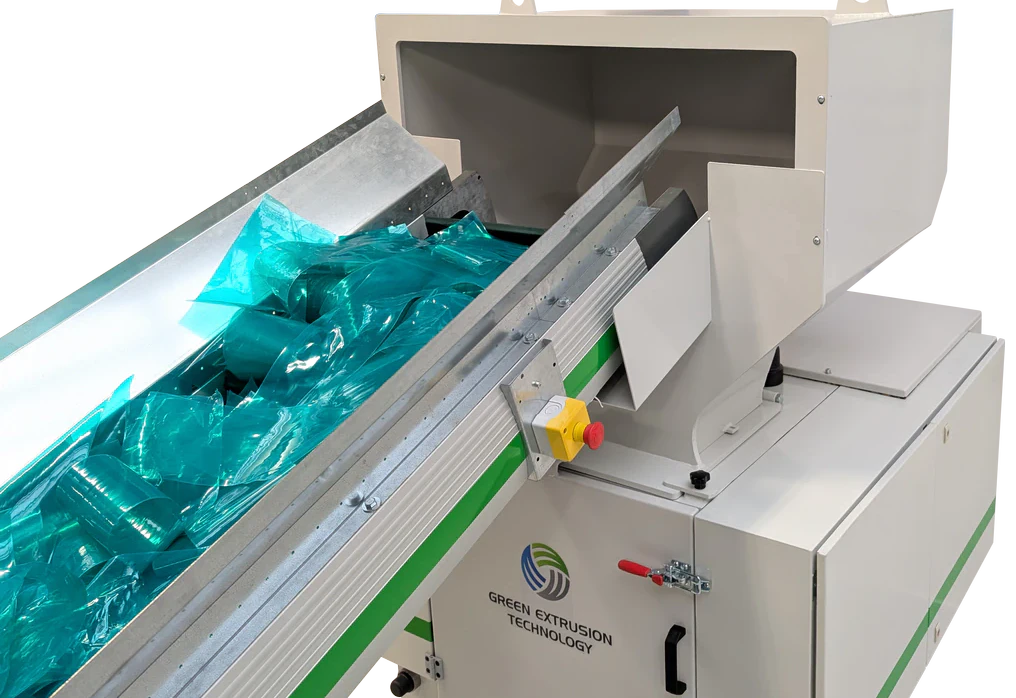
A granulator cuts suitable production scrap into regrind with a controlled particle size. Depending on the machine design, this can include sprues, runners, rejected parts, profiles, sheet skeletons, film or other clean production waste. Good selection gives a regrind that can be conveyed, dosed and tested for reuse. Poor application fit can create excessive fines, blocked screens, heat, low capacity or fast knife wear.
This guide explains the decisions that decide the result. The order is deliberate: start with the material and the waste, then the capacity, then the cutting chamber, the rotor and knives, the screen, the feeding method and the maintenance access. Each step narrows the choice, so that the final machine fits the work rather than the other way round.
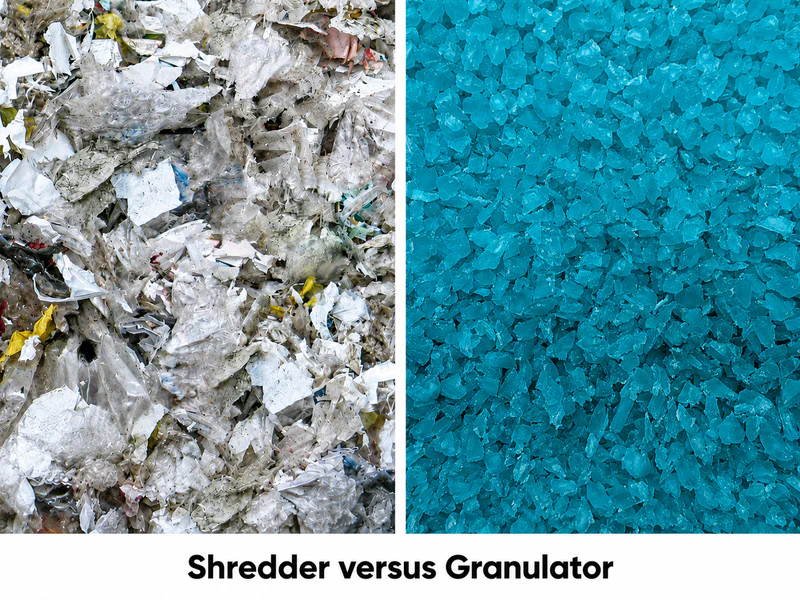
Before you start: a granulator and a shredder are not the same machine. A shredder tears bulky or tough waste at low speed; a granulator cuts cleaner scrap into uniform regrind. If you are not sure which one fits your waste, read Granulator or Shredder: What Is the Difference? first.
Step 1: Start with the material and the waste
The material decides almost everything that follows. A granulator that is perfect for soft film is the wrong machine for thick, rigid parts, and the reverse is also true. Before any specification, describe the waste honestly in four ways.
Polymer type and behaviour. Soft and tough materials such as LDPE film and flexible compounds need a clean shearing cut and the right knife angle to avoid smearing. Rigid materials such as PS, ABS, PET or filled compounds are more brittle and cut more easily, but they are harder on knives and screens. Glass-filled and mineral-filled grades are abrasive and shorten the life of every wear part.
Shape and size of the waste. Sprues and runners, thin wall cups, blow-moulded bottles, thermoformed skeletons, heavy profiles and large purgings all behave differently in the cutting chamber. Bulky and hollow parts need a chamber that can ingest them; thin film needs feeding that does not let the material float or wrap.
Bulk density and volume. Light, bulky scrap fills a chamber by volume long before it reaches the motor limit by weight. This is why a film granulator and a sprue granulator with the same motor can have very different real outputs.
Contamination and condition. Metal inserts, paper labels, dust, moisture and mixed polymers all affect the choice. If metal can reach the machine, a metal detector on the feed protects the rotor and knives.
Practical tip: write down the three or four waste types that make up most of your volume, with an estimate of the kilograms per hour for each. This single list drives the capacity, the chamber and the screen choice that follow.
Step 2: Choose the configuration for your floor
In house granulation is organised in a few standard ways. The configuration is a floor-layout decision as much as a machine decision, and it has a direct effect on cleaning, labour and regrind quality.
Beside-the-press granulators
A beside the press granulator is defined mainly by where and how it is used: close to one production machine so scrap can be recovered immediately and kept traceable. Both conventional blade granulators and slow speed screenless designs are used in this role. Slow screenless units are especially common for hard, brittle injection moulding sprues and engineering plastics; film, sheet and flexible trim need a cutting chamber and feeding system designed to capture thin material.
Central granulators
A central granulator serves several machines from one location. Scrap is collected and brought to a larger unit, often with conveyors, blowers or vacuum evacuation. This can suit higher volumes and larger parts, but material separation and cleaning become more important when different colours or polymers share the same system. Cleaning frequency should be set by the actual material change pattern and contamination requirement, not by a fixed number of times per day.
Thermoforming and under-the-press granulators
Thermoforming lines produce continuous sheet skeleton waste. A granulator placed under or in line with the thermoformer takes this web directly and returns clean regrind to the process. The chamber and feeding are designed for a steady sheet rather than loose parts.
| Configuration | Where it sits | Best for | Main trade-off |
|---|---|---|---|
| Beside-the-press | Next to one line | Short runs, frequent material changes, clean and traceable reclaim | Lower volume per unit |
| Central | One central area | High volume, larger parts, continuous work | More noise and dust, needs conveying and cleaning |
| Thermoforming / under-the-press | Under or in line with the former | Continuous sheet skeleton from thermoforming | Designed for web, not loose parts |
Step 3: Match the capacity to the scrap rate
The simple rule is that the granulator must keep up with the waste without becoming the bottleneck. The throughput should be comfortably above the rate at which the line produces scrap, with headroom for the busiest material. A machine that is too small forces operators to feed slowly, overheats the regrind and wears parts faster. A machine that is far too large wastes energy and floor space.
Throughput is not a single number. It depends on the rotor size and speed, the motor power, the screen hole size and, above all, the material. The same granulator will give very different outputs on light film and on dense rigid parts. For this reason, capacity figures should always be confirmed against your own material, ideally with a trial.
Do not select capacity from motor power alone. Real throughput depends on the polymer, scrap dimensions, wall thickness, bulk density, rotor and chamber design, screen, feeding and discharge. Give the supplier your normal and peak scrap rate, then confirm the proposed capacity on representative material whenever possible. Allow useful headroom for peak waste generation, but avoid gross oversizing that adds floor space and energy without improving regrind quality.
Not sure which size fits your scrap?
Tell us your main waste types and the kilograms per hour, and we will help you match a Green Extrusion granulator to the work.
Step 4: Understand the cutting chamber and rotor
The cutting chamber is where the result is decided. Two features matter most: the geometry of the chamber and the design of the rotor.
Chamber geometry. The inlet angle, chamber depth and relationship between rotor and bed knives determine how well the machine captures the scrap. Bulky parts, long profiles, film and thin trim can need very different feeding arrangements. Match the chamber to the dominant waste rather than choosing a geometry from a general label alone.
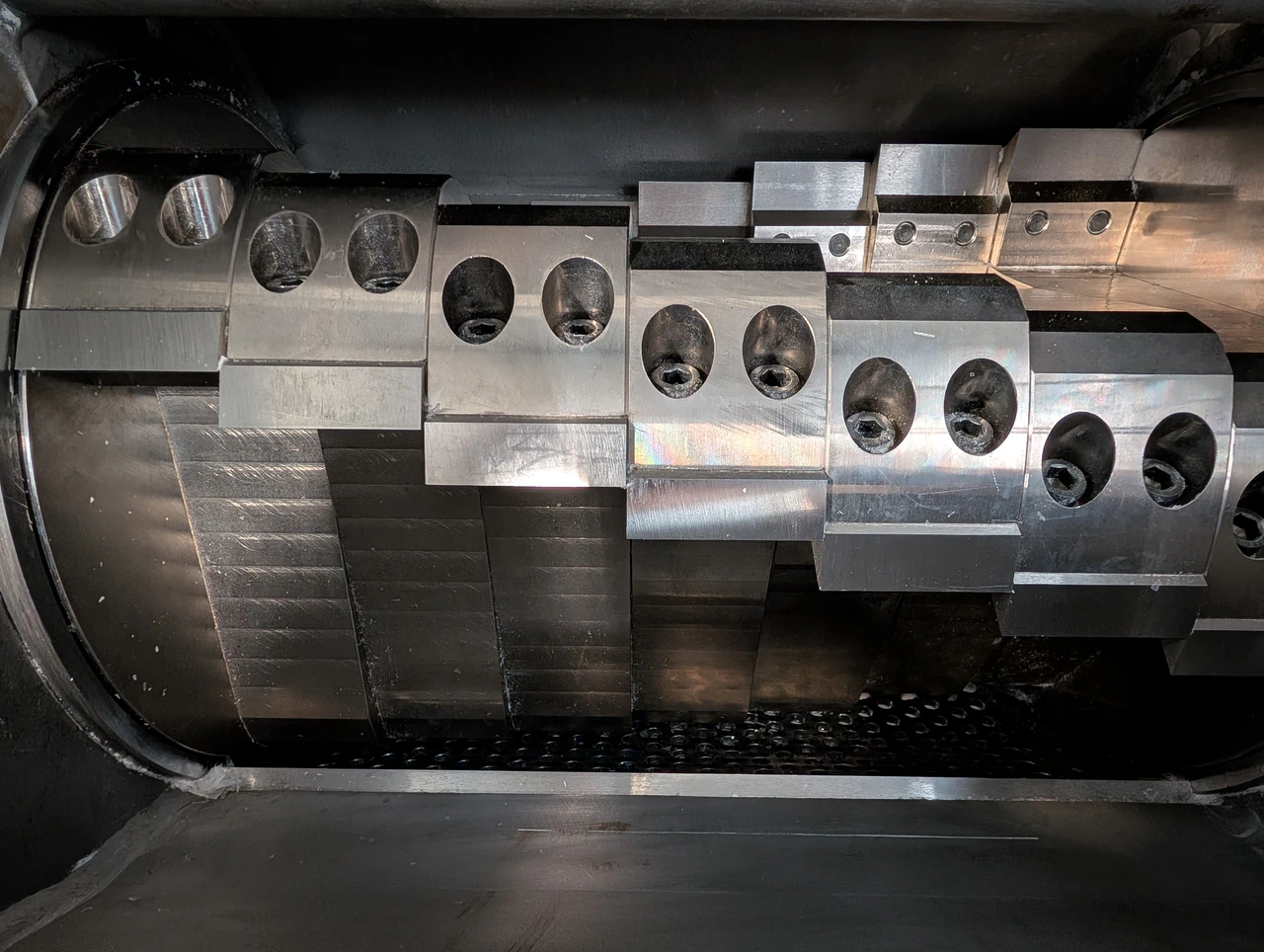
Rotor type. Open rotors can reduce trapped material and heat, which is useful for warm or heat sensitive feedstock. Heavier closed or solid rotors provide more rotational inertia for thick or difficult parts. Staggered or angled knife patterns can spread the cutting load across the rotor width. These are design options rather than universal rules, so the rotor should be selected with the actual part geometry and material.
Step 5: Knives and the cutting gap
The knives and the clearance between rotor and bed knives have a direct effect on regrind quality. The correct clearance is the value specified for the machine and knife design, not simply “as small as possible”. Dull knives or incorrect and uneven clearance can turn cutting into tearing or rubbing, increasing dust, heat, motor load and particle size variation.
Knife material. Knife steel and heat treatment should match the scrap and the manufacturer specification. Filled and abrasive compounds can shorten knife life significantly and may justify higher wear grades. The supplier should select knife material together with the rotor, expected contamination risk and sharpening programme rather than from the polymer name alone.
Maintenance of the cut. Knives can be reground and reset several times before they are replaced. Pre-adjustable knives, set outside the machine, make this fast and keep the gap accurate. Easy access to the knives is not a luxury; it decides how often the gap is actually corrected, and therefore how good the regrind stays over time.
For a deeper look at how rotors, knives and screens work together, see Rotor Design, Knives and Screen Size in Plastic Granulation.
Step 6: Choose the screen size for the regrind you need
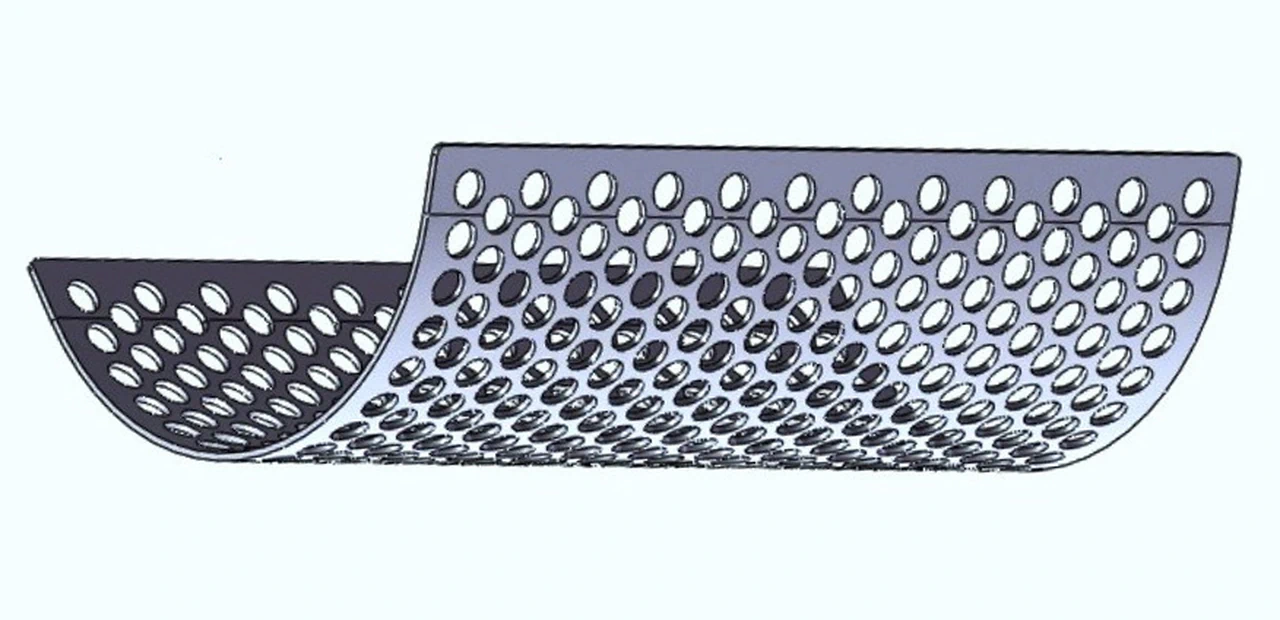
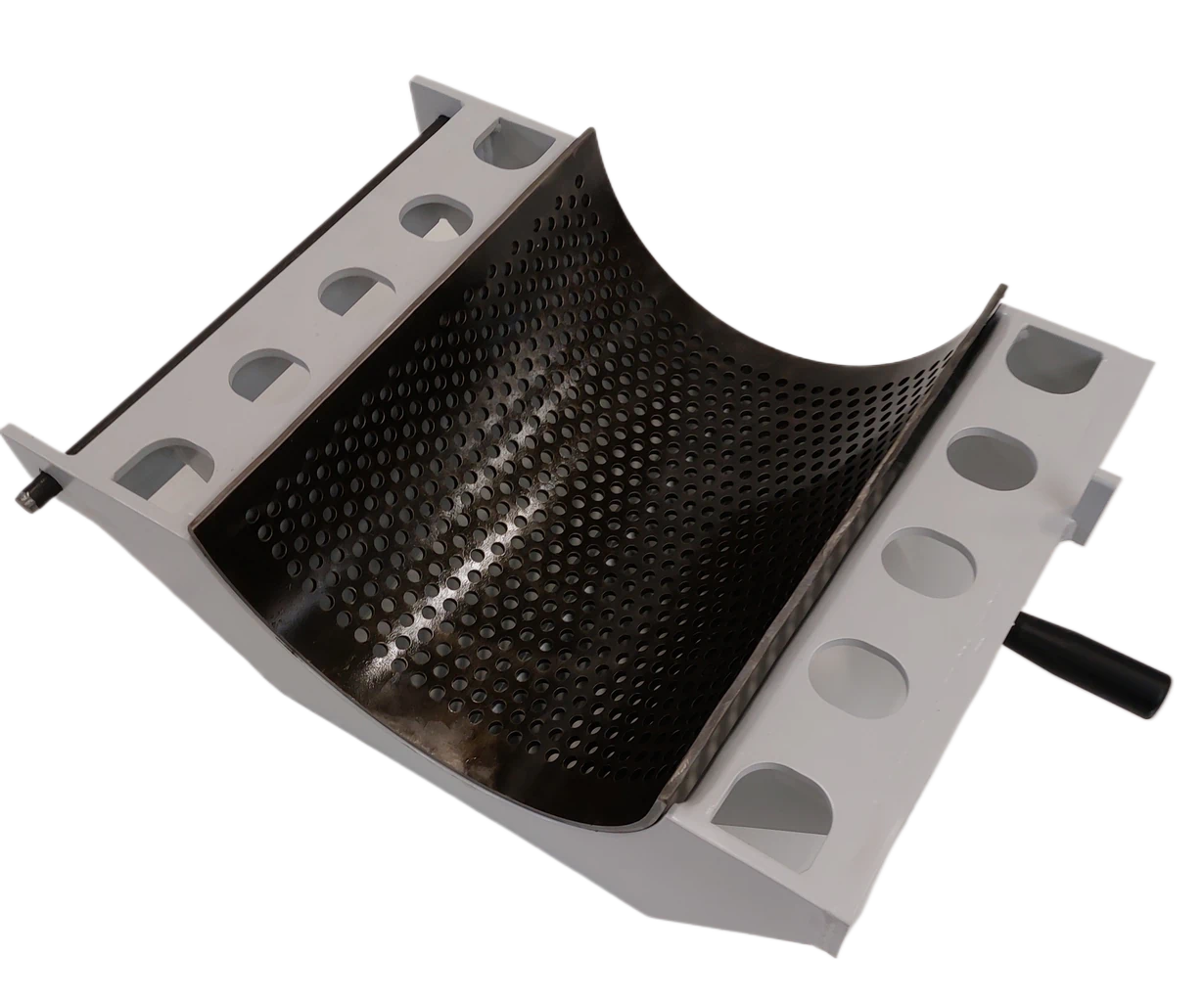
The screen sits under the rotor and holds the material in the chamber until it is small enough to pass through the holes. The hole diameter therefore sets the largest particle in the regrind. This is one of the most important and most adjustable choices on the machine.
A larger hole gives coarser regrind, a higher throughput and less heat, but a wider range of particle sizes. A smaller hole gives finer and more uniform regrind that is closer to virgin pellet size, but it lowers the throughput and can raise heat, dust and fines because the material stays in the chamber longer. The aim is the largest hole that still gives a regrind your downstream process can feed and accept.
| Screen hole (orientation) | Regrind character | Typical use |
|---|---|---|
| Larger holes | Coarser, higher throughput, more size spread | First-stage reduction, bulky parts, feeding a downstream step |
| Medium holes | Balanced size, good flow, moderate fines | General reclaim for direct reuse and blending with virgin |
| Smaller holes | Fine, uniform, near pellet size, lower throughput | Sensitive processes, high reuse rate, fine feeding |
Screen open area, thickness and hole geometry are machine specific. Use the manufacturer options for the selected granulator and choose the hole size from the required regrind and real throughput test. Keeping approved spare screens for the main materials makes it easier to change particle size without long downtime.
Step 7: Feeding, sound, dust and safety
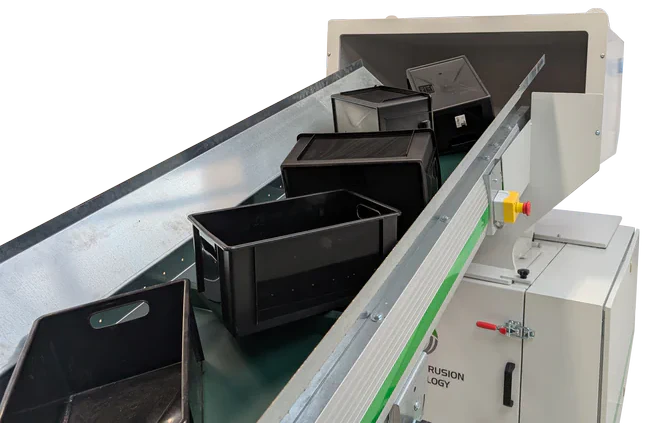
How the material reaches the rotor matters as much as the rotor itself. Manual hand feeding is simple and flexible for small volumes. A metered infeed conveyor gives a steady, even load and keeps the chamber full without overloading the motor; the conveyor speed can be linked to the motor current so that feeding slows down automatically under heavy load. A metal detector on the conveyor can stop the feed when metal is found, which protects the knives and the rotor.
Noise and dust are real selection criteria, not afterthoughts. Sound insulated hoppers or enclosures can reduce workplace noise, while correctly sized blower, cyclone or vacuum evacuation keeps material moving away from the screen. Fines removal can be added where the next process is sensitive to dust. Access interlocks, rotor locks and the site isolation procedure are essential and must never be bypassed.
Step 8: Maintenance access and uptime
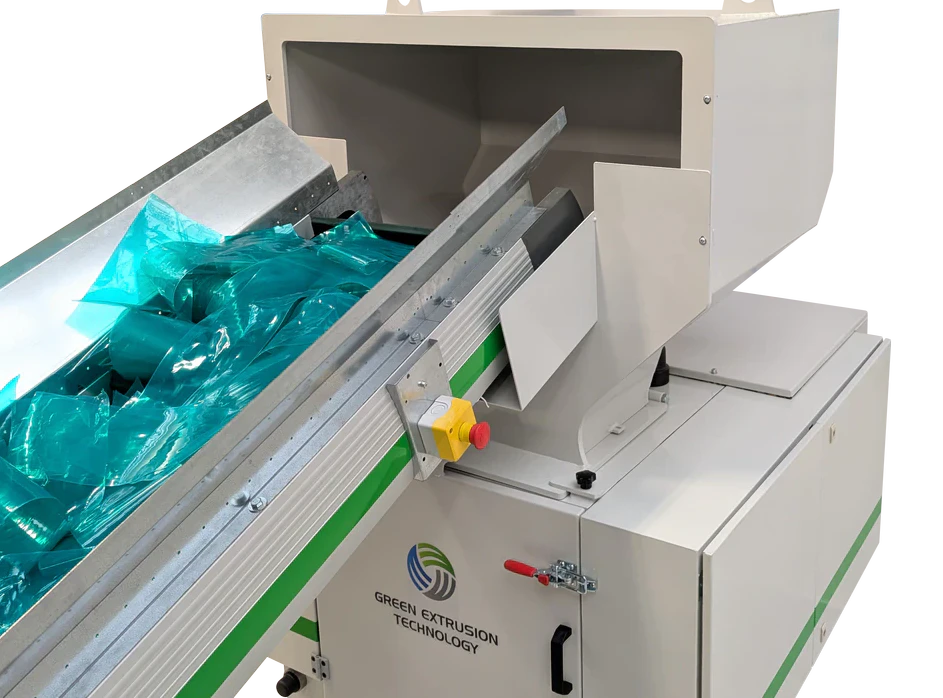
A granulator earns its place only when it is running. The features that protect uptime are easy access for cleaning and knife changes, a screen that can be removed and rotated without special tools, and wear parts that are simple to obtain. A drop-down screen cradle and a hopper that opens with a gas cylinder turn a long job into a short one. Good access also keeps the regrind clean, because the chamber can actually be cleaned between materials.
Step 9: Think about the regrind, not only the machine
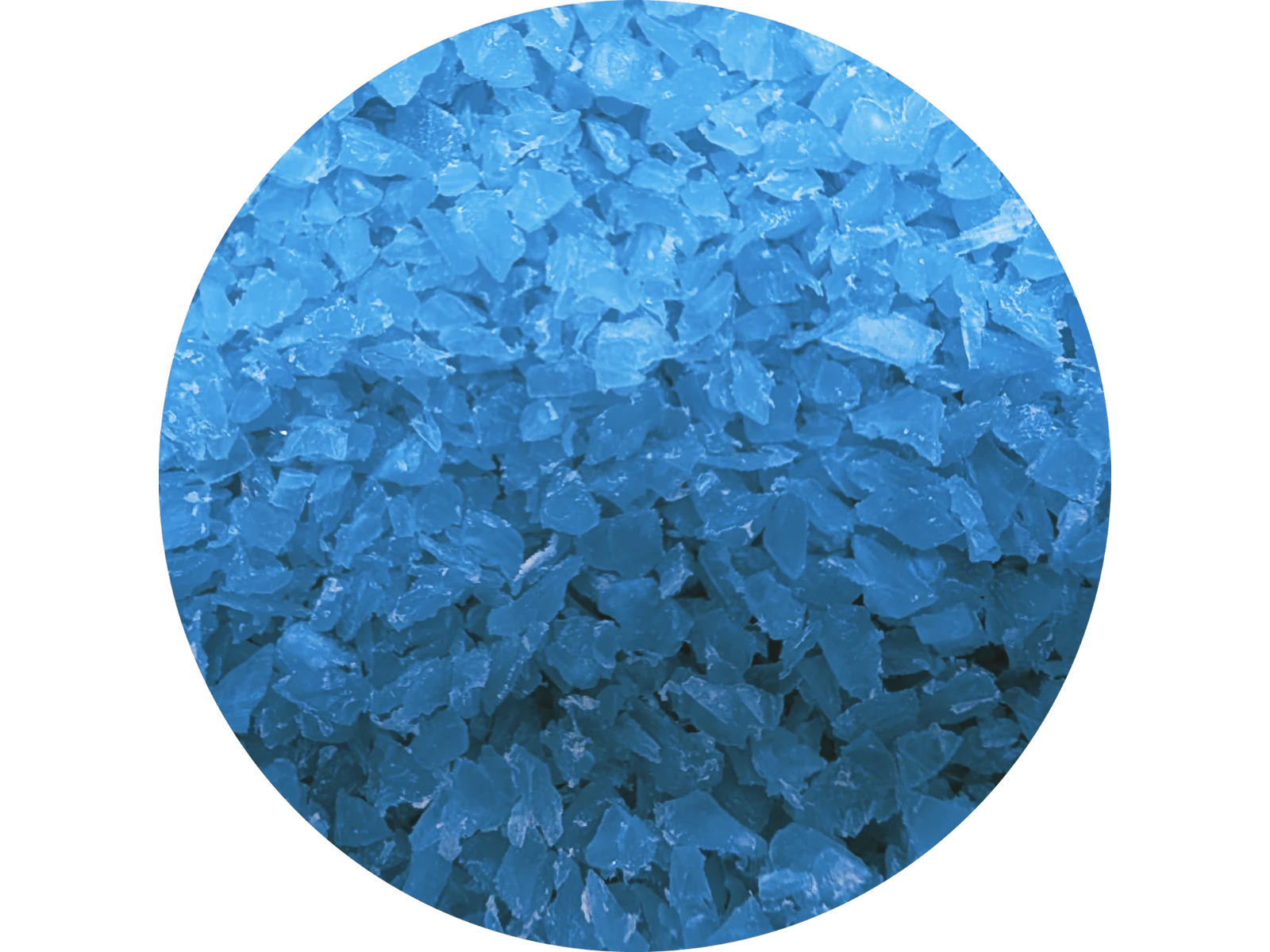
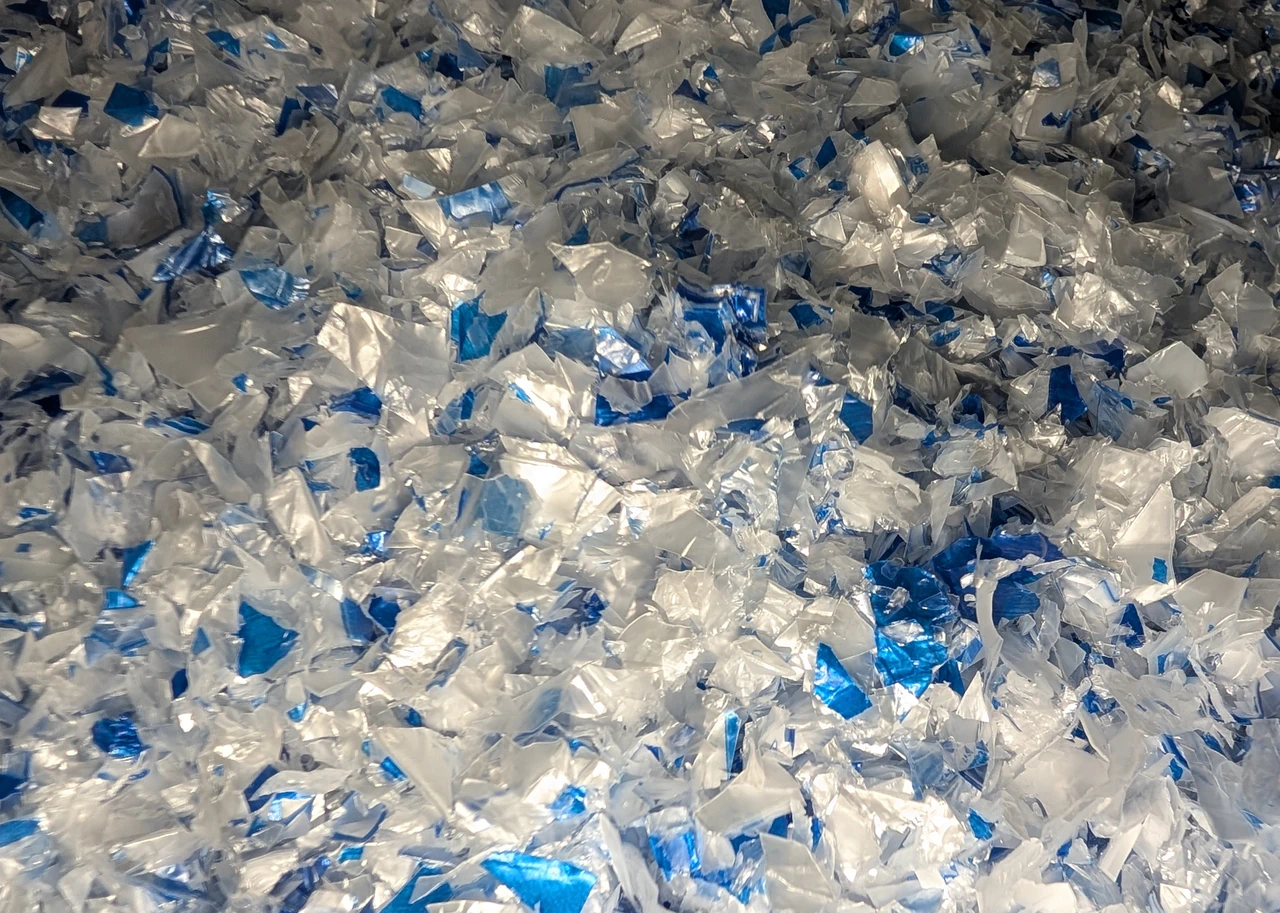
The granulator is chosen to produce a regrind that your process can use. Good regrind has a controlled particle size, a low level of dust and fines, a stable bulk density and a clean, dry condition. These qualities decide how much regrind can be added back into production and how stable the result will be.
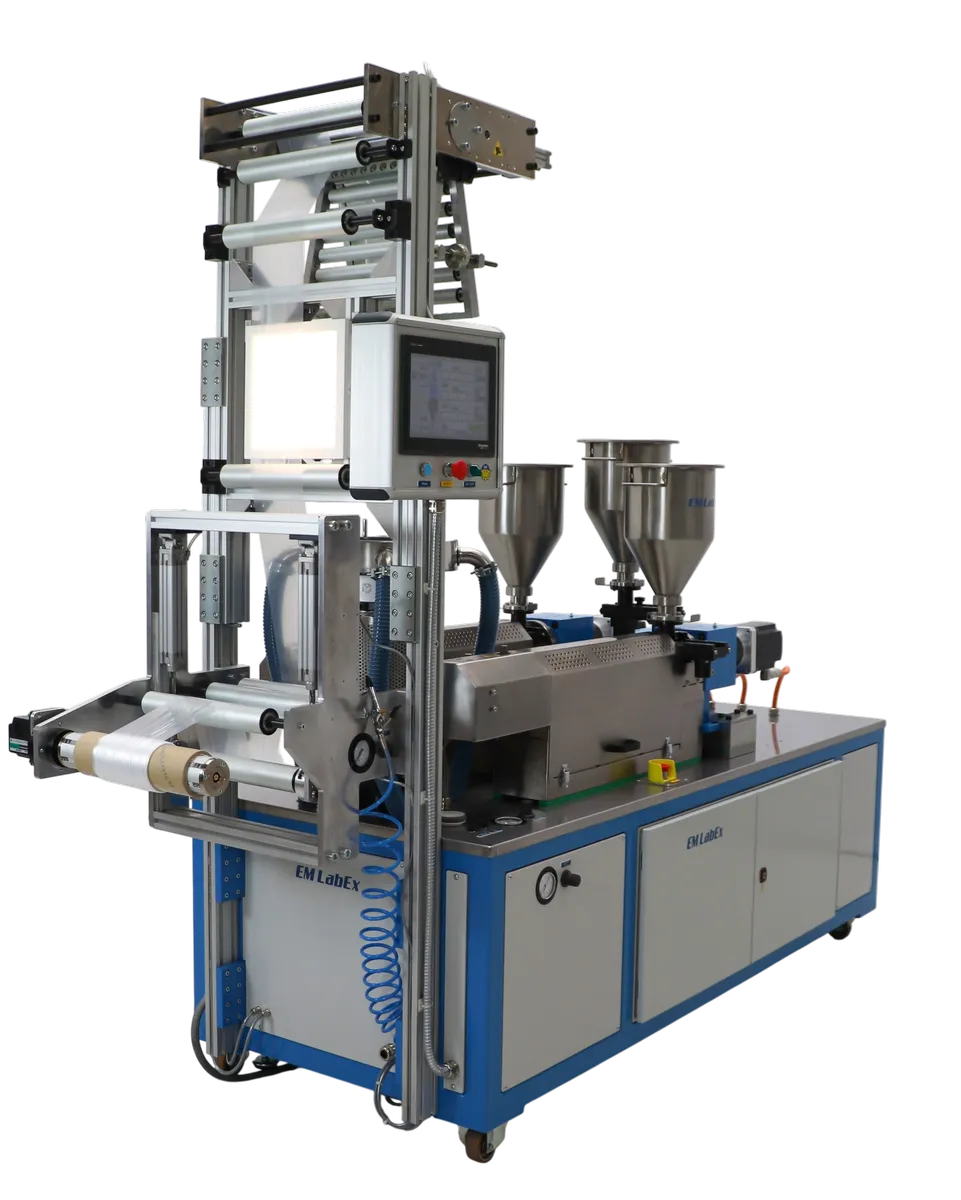
Before committing to a high reuse rate, it is good practice to test the regrind. A small laboratory extruder can process the regrind, or a blend of regrind and virgin, so that process stability, melt behaviour and the final product can be checked at low risk. Moisture matters too; many materials need drying before reuse. For this, see Moisture, Drying and Material Preparation Before Extrusion and Using Regrind in Production: Practical Considerations.
A practical selection checklist
Use this short checklist when you compare machines or prepare a request for a quotation.
Material and waste
- Main polymer types and whether they are soft, rigid, filled or abrasive
- Shape and size of the waste: sprues, parts, film, sheet, profiles, purgings
- Estimated kilograms per hour for each main waste type
- Contamination risk, including metal, labels and moisture
Machine and process
- Configuration: beside-the-press, central or thermoforming
- Capacity with clear headroom above the scrap rate
- Chamber geometry and rotor type matched to the dominant material
- Knife steel grade matched to the material; pre-adjustable knives
- Screen size for the regrind your process needs, plus spare screens
- Feeding method, with conveyor and metal detector if required
- Sound enclosure, evacuation and dust handling
- Tool-free access for cleaning and knife changes
- Plan to test the regrind before a high reuse rate
Where Green Extrusion fits
Green Extrusion Technology supplies Mini GRAN, GRAN production granulators, laboratory granulators and single shaft shredders for size reduction of plastics and bio based polymers. The right model depends on the waste dimensions, material, feed method, target regrind and required capacity. Clean, traceable production scrap can often be granulated directly; bulky or difficult waste may need shredding first.
For development, regrind testing and small batches, Green Extrusion also supplies laboratory extruders. A lab test can show whether a chosen regrind size and blend gives stable feeding, melt behaviour and product quality before the material is introduced into a production recipe.
See Green Extrusion in house granulators
See Green Extrusion granulators for in house size reduction and discuss the model, feed arrangement and screen that fit your waste stream.
Frequently asked questions
What size granulator do I need for in house scrap?
Choose a throughput that is comfortably above the rate at which your line produces scrap, so the granulator is never the bottleneck. The real capacity depends on the rotor, the motor power, the screen size and the material, so the figures should always be confirmed against your own waste, ideally with a trial.
What does the screen size control?
The screen hole diameter sets the largest particle that can leave the chamber, so it controls the maximum regrind size. Smaller holes give finer and more uniform regrind but lower the throughput and can raise heat, dust and fines.
Should I use a low speed or a standard granulator?
Slow speed screenless granulators are commonly used beside injection moulding machines for hard, brittle sprues and engineering plastics, where low noise and low fines are priorities. Conventional blade and screen granulators cover a wider range of parts, sheet, profiles and film when the chamber and feed system are designed for the material. Choose from the actual scrap rather than from speed alone.
Can I reuse regrind directly in production?
Sometimes. Direct reuse depends on polymer, contamination, thermal history, moisture, particle size, addition rate and the finished product specification. Test the regrind and define a controlled blend before increasing the reuse rate.
Related Green Extrusion equipment
Equipment for in house size reduction, regrind testing and small scale recycling.
Ready to choose your granulator?
Send us your main waste types and capacity, and we will help you select a Green Extrusion in house granulator and, if useful, a lab extruder to test your regrind first.