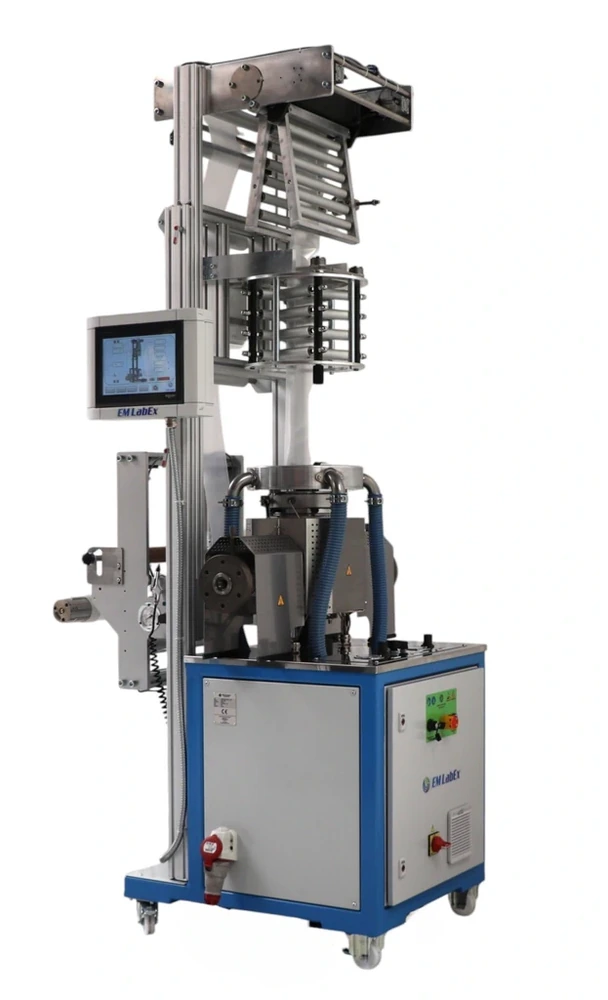
Air ring and film bubble
Uniform adjustable cooling supports controlled bubble geometry and stable film production.

The LabEx 25-1 produces a controlled single-layer blown film from one melt stream. It gives film producers, polymer developers, recyclers, universities and technical schools a professional platform for testing formulations, optimising process settings, training operators and producing customer samples without occupying a full production line.
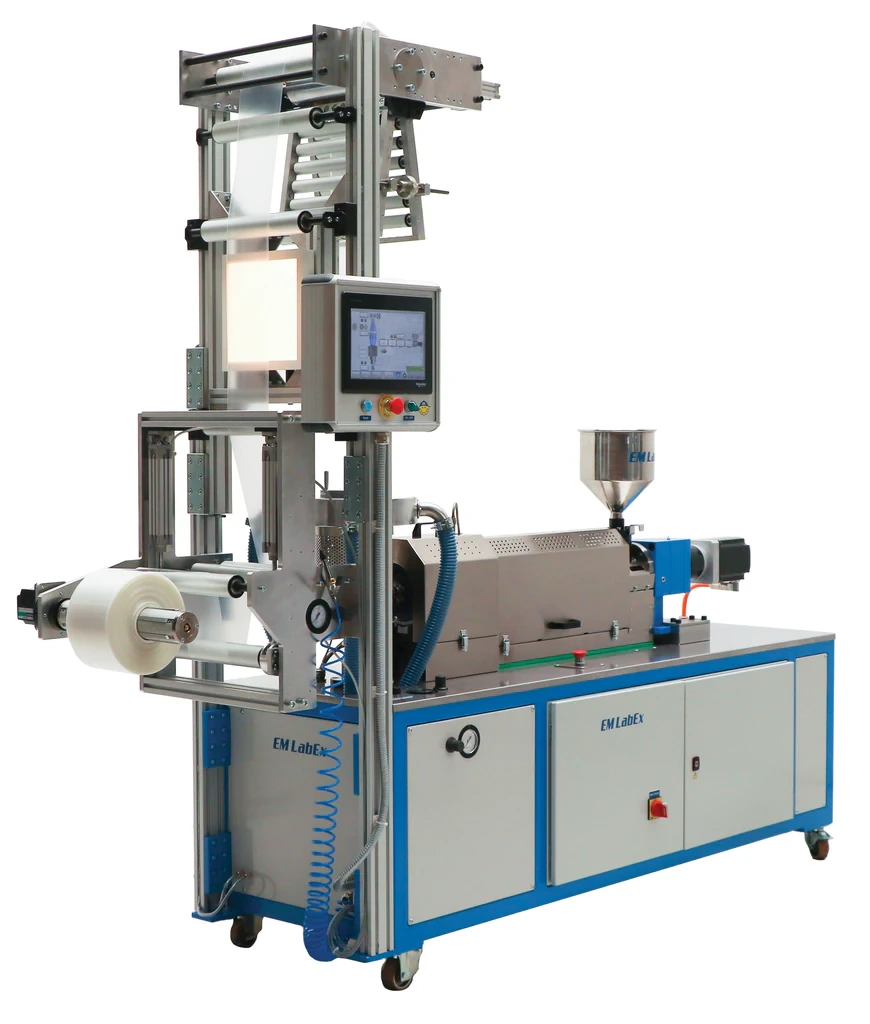
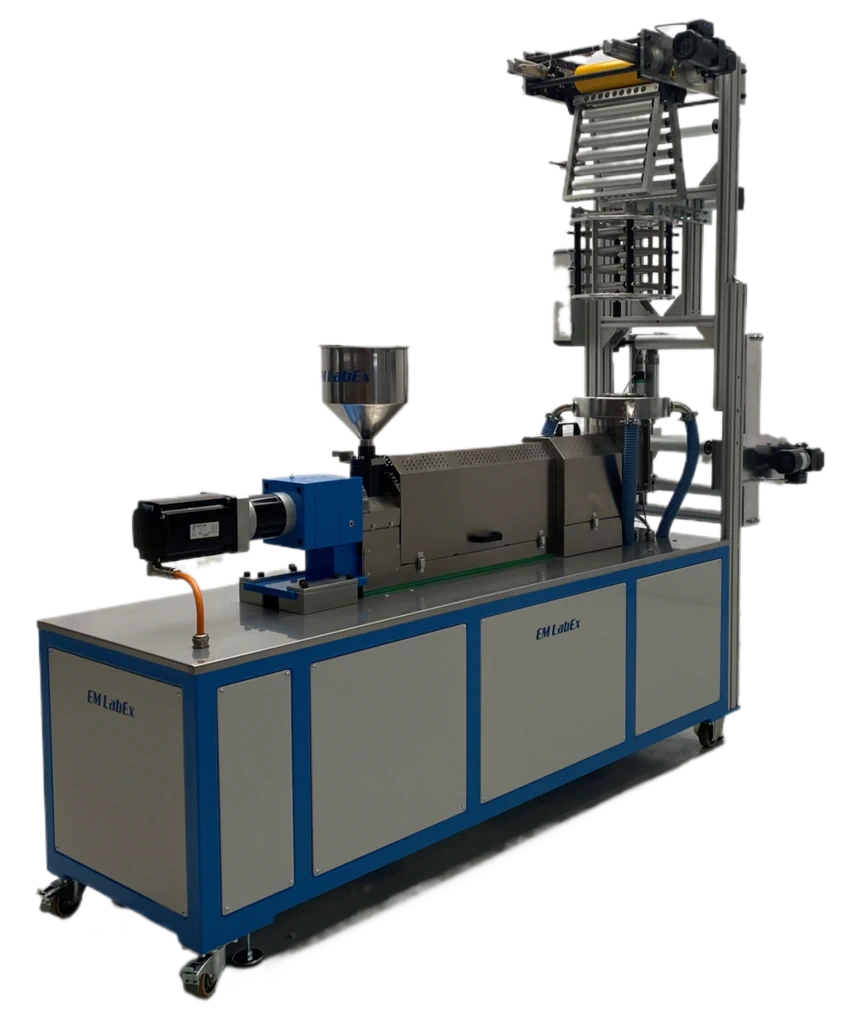
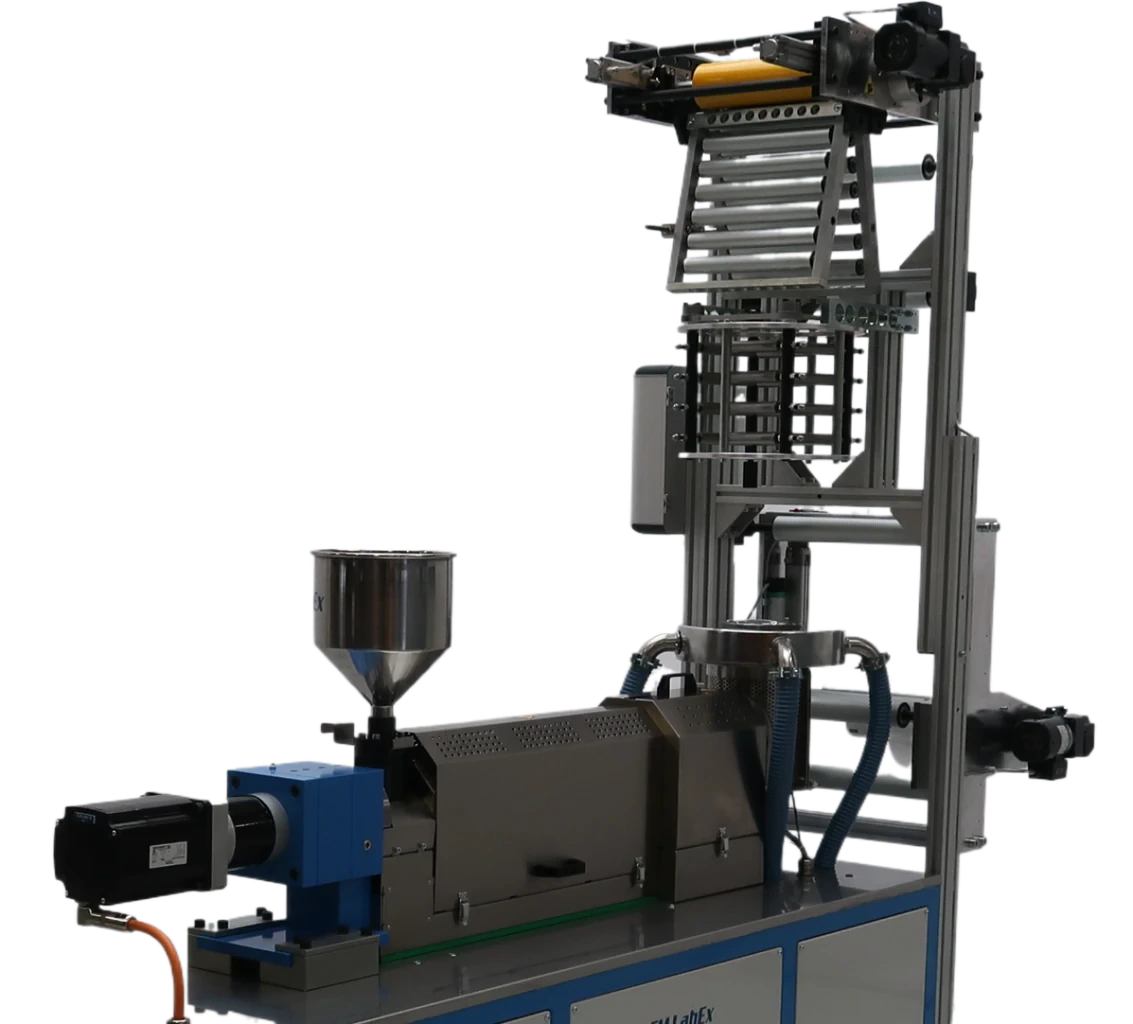
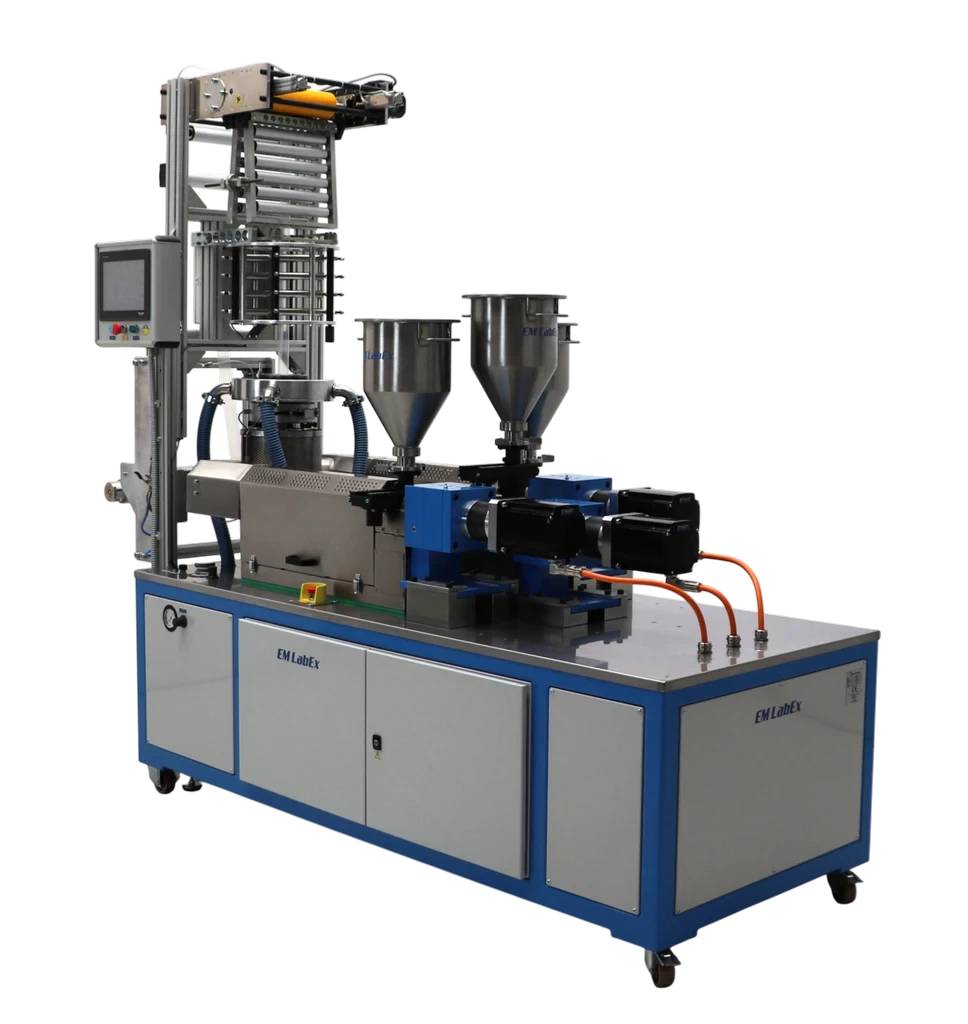
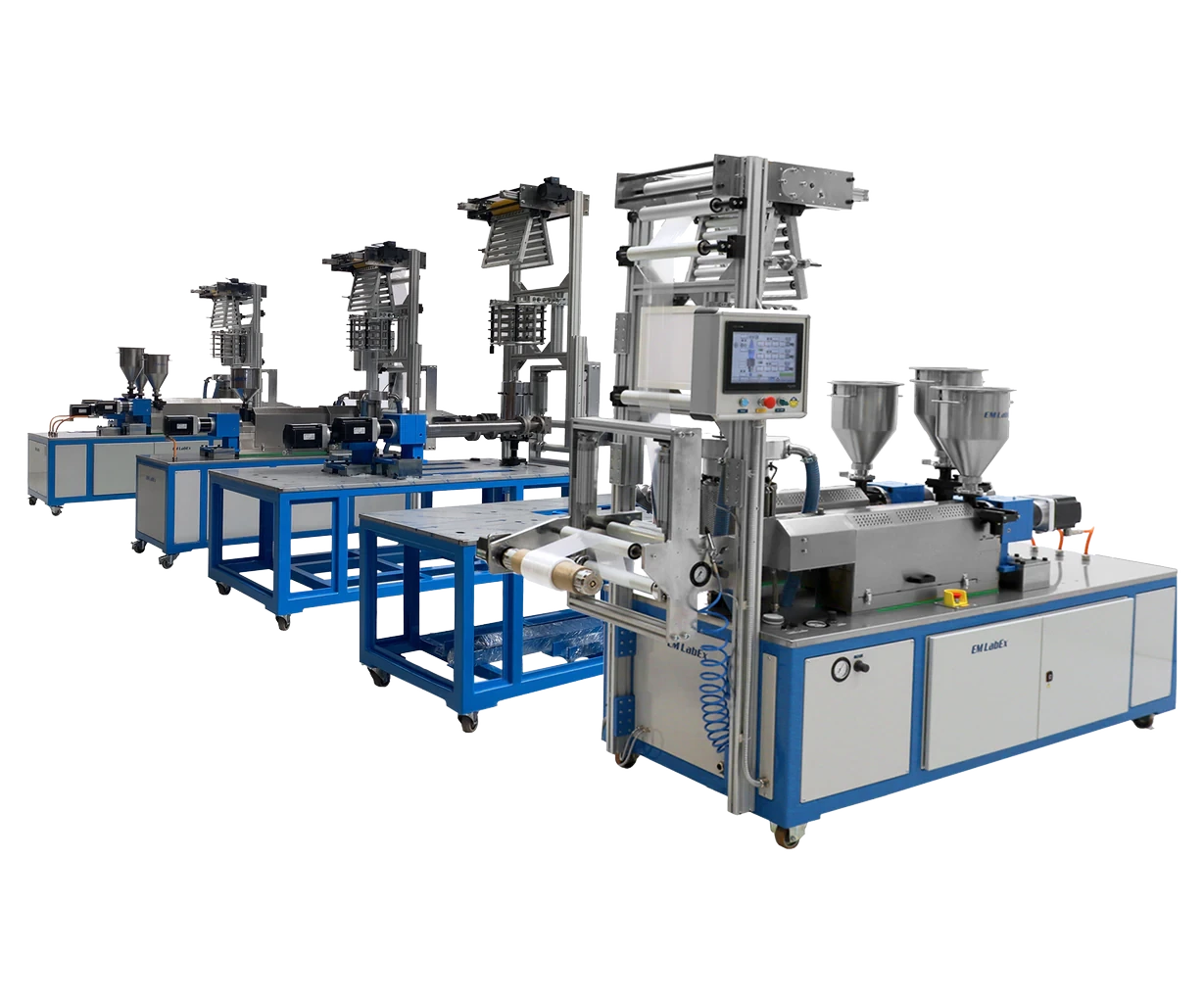
 LabEx 25-1 · complete mono-layer laboratory line
The mono-layer configuration keeps the process clear and economical while retaining the essential stages of a real blown film line: feeding, melting, film formation, cooling, collapsing, take-off and winding.
Compare polymer grades, blends, recycled content, masterbatch, additives and processing windows using much smaller material quantities than on a production line.
Evaluate film-forming behaviour, bubble stability, appearance and process consistency before approving a material lot for production.
Produce narrow tubular film samples for internal evaluation, customer approval, trade fairs and technical discussions.
Teach the complete blown film process on an accessible machine without disturbing production or exposing trainees to a large industrial line.
Study how recycled, bio-based and compostable compounds feed, melt, cool and form film before scaling up.
Develop stable recipes and operating windows for temperature, screw speed, bubble cooling, take-off and winding.
The LabEx 25-1 is not only an extruder. It is a complete compact line that allows the material and every main process stage to be observed and controlled.
Load the base polymer together with masterbatch, additives or controlled recycled content.
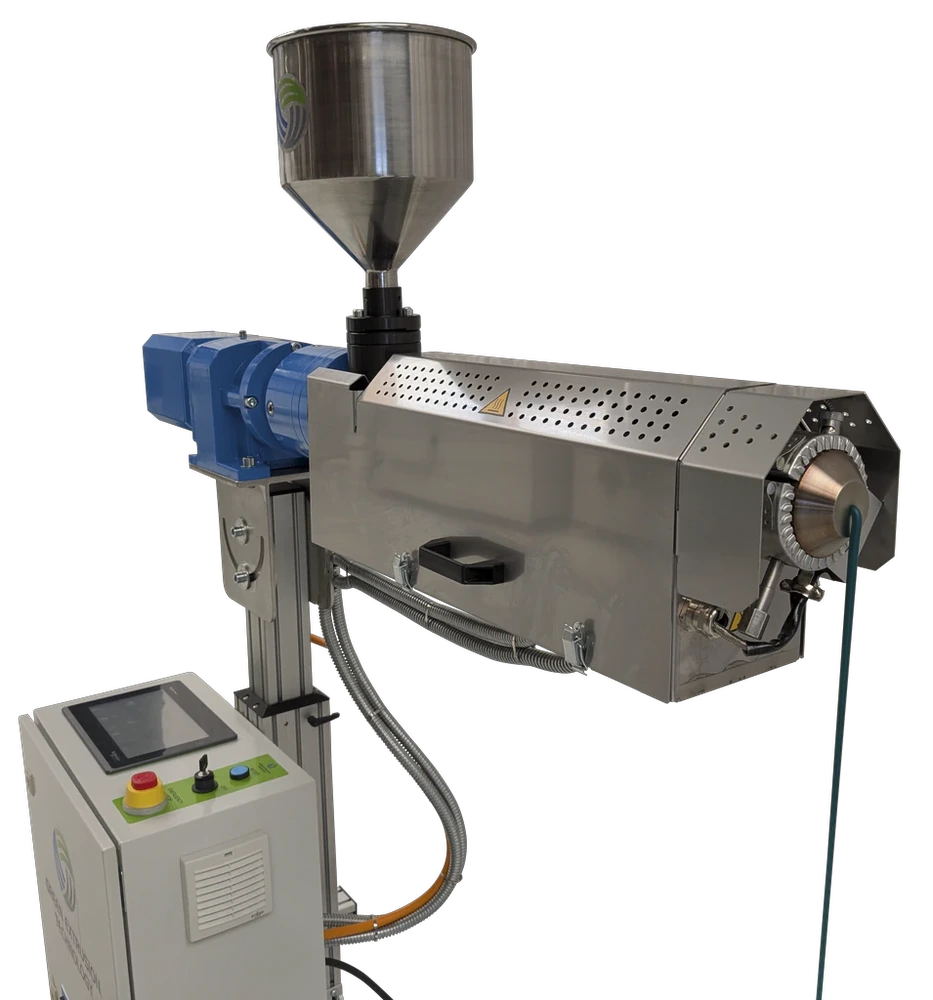
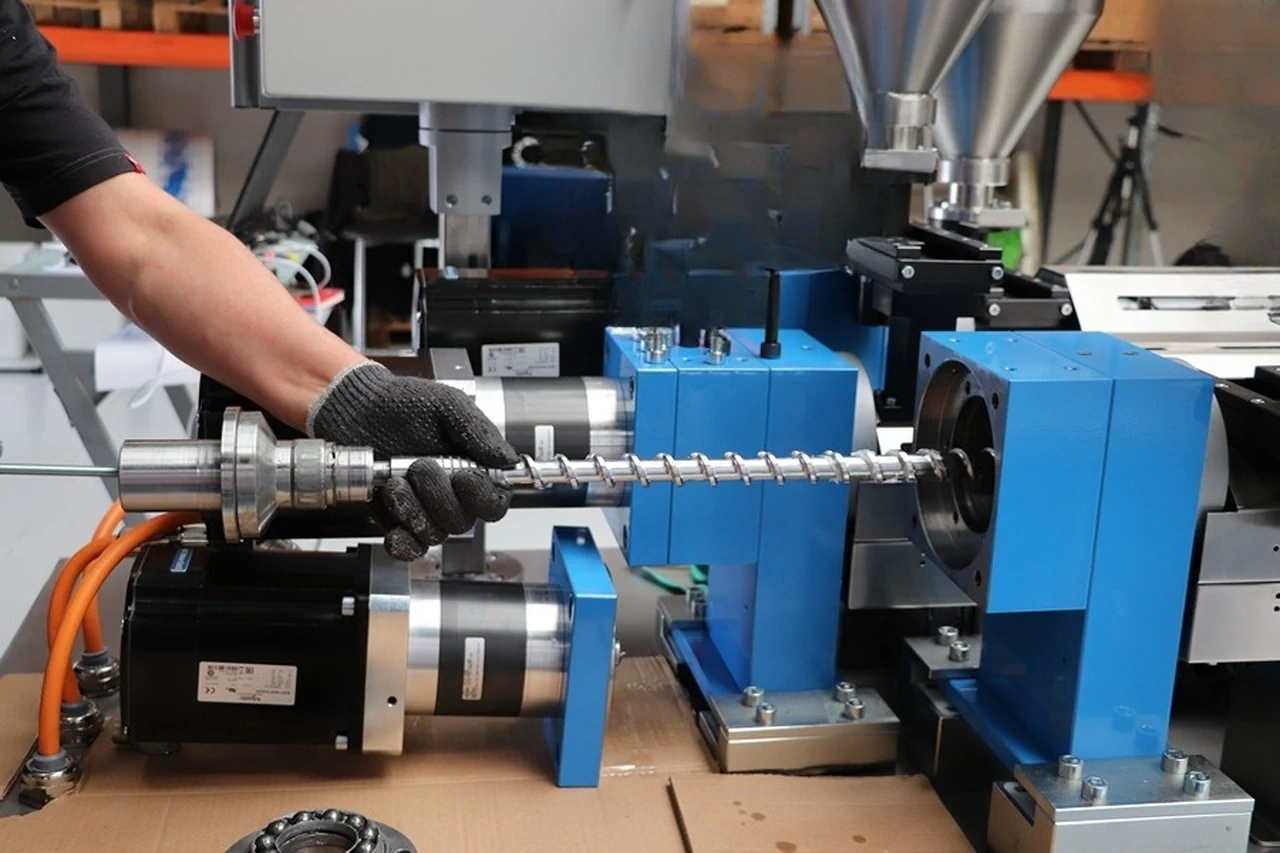
The screw transports, melts and homogenises the formulation through the heated barrel.
The mono-layer die head forms the melt into a circular tube.
The air ring cools the film and helps establish a stable frost line and bubble geometry.
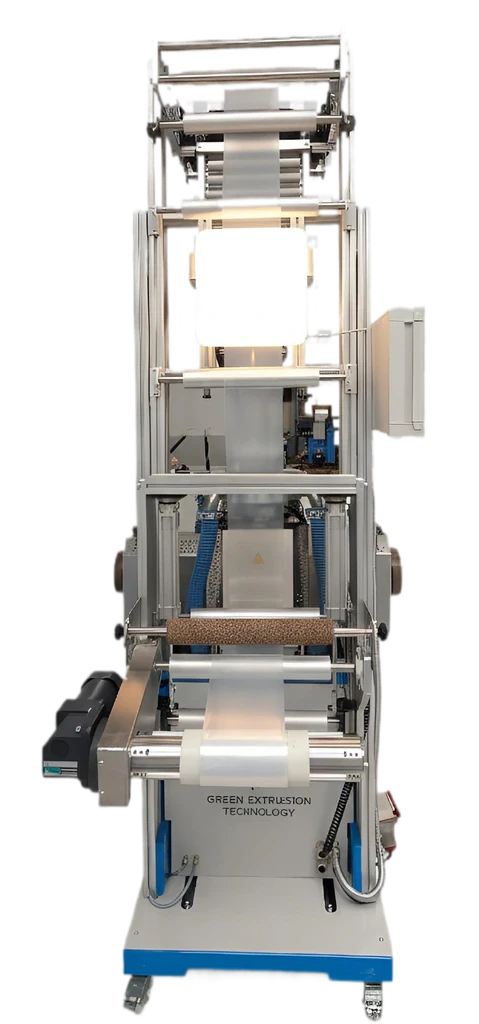
The tower guides and flattens the bubble while the nip rolls control line speed.
The finished film is wound into a controlled roll for evaluation or customer samples.
The standard LabEx 25-1 configuration can be adapted to the material, die diameter, winding requirement, electrical supply and additional measurement or feeding equipment.
| Machine section | Specification |
|---|---|
| Extruder screw | One 25 mm screw, L/D 28:1. Screw diameters from 18 to 30 mm are available for customer-specific configurations. |
| Screw design | Versatile barrier screw with an integrated mixing section for stable melting and improved dispersion of colour, additives and recycled content. |
| Screw speed | Constant controlled speed from 1 to 120 rpm. |
| Barrel | High-quality nitrided steel barrel, available with a smooth or grooved feed zone. |
| Heating | Ceramic heater bands with eight PLC-controlled heating zones. |
| Mono-layer die head | PM 300 steel (DIN 1.2379), hard-chrome or PVD treated. Prepared for die inserts from Ø25 to Ø70 mm; Ø30 mm supplied as standard. |
| Film width | Approximately 50 to 300 mm, depending on the selected die insert, material and process settings. |
| Air ring | High-efficiency air ring with adjustable 360-degree cooling airflow. |
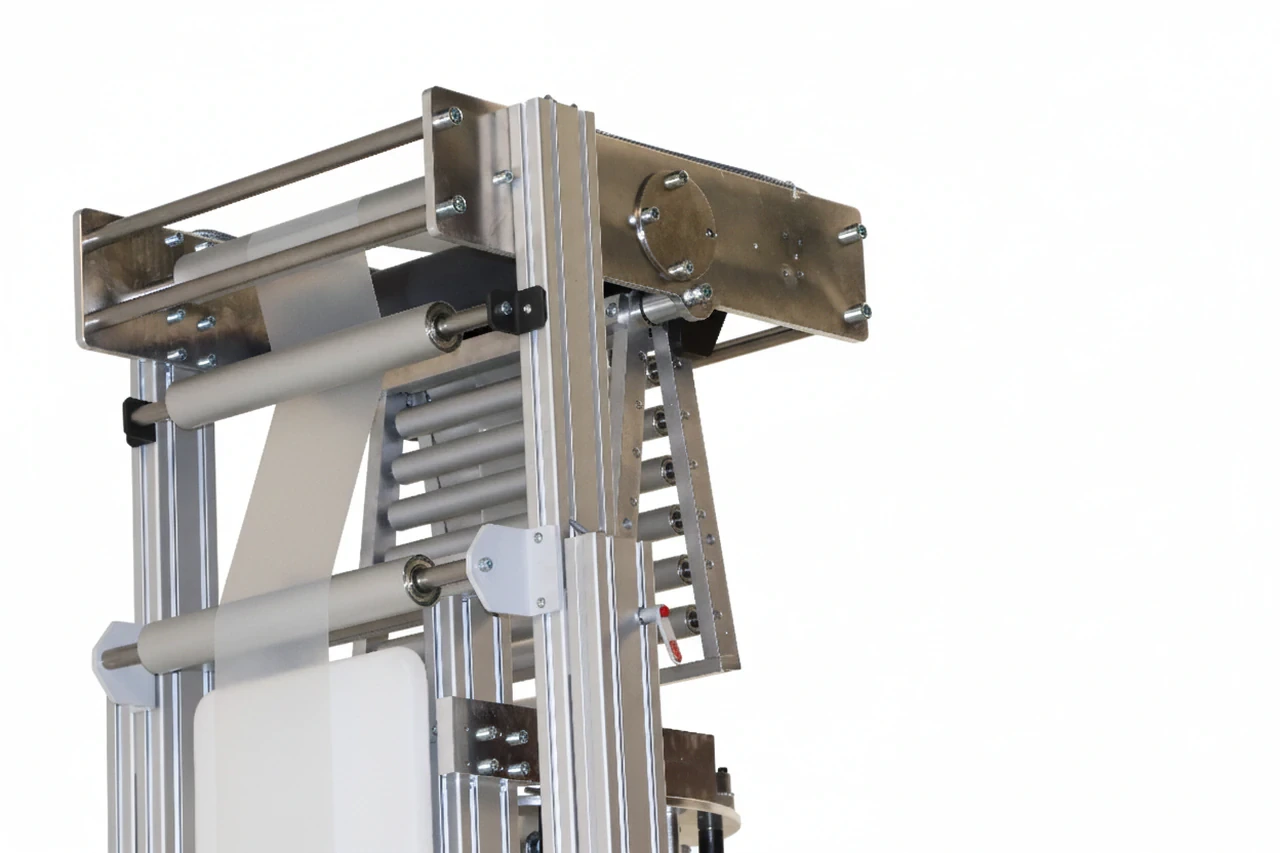
| Calibrating basket | Adjustable arms and rollers for film-bubble guidance and stabilisation. |
| Take-off | A-frame and nip-roll take-off with controlled speed, film guidance and easy threading. |
| Winder | Standard non-contact winder with AC inverter control and an air-expanding shaft. Contact and double-shaft versions are available. |
| Control system | Schneider Electric PLC and touchscreen HMI for temperatures, screw speed, take-off, winding, alarms and recipes. |
| Electrical supply | 3 × 400 V AC, 50 Hz, with 24 V DC control voltage. Alternative mains voltages are available on request. |
| Nominal connected power | Approximately 12 kW for the standard configuration. |
| Standards | Designed in accordance with relevant IEC and DIN requirements. |
Uniform adjustable cooling supports controlled bubble geometry and stable film production.

Guides and stabilises the film bubble while allowing adjustment for different film dimensions.

The standard non-contact winder provides controlled speed and a practical air-expanding shaft for roll changes.
The open and compact layout makes the process visible, simplifies training and provides practical access for cleaning, material changes and maintenance.
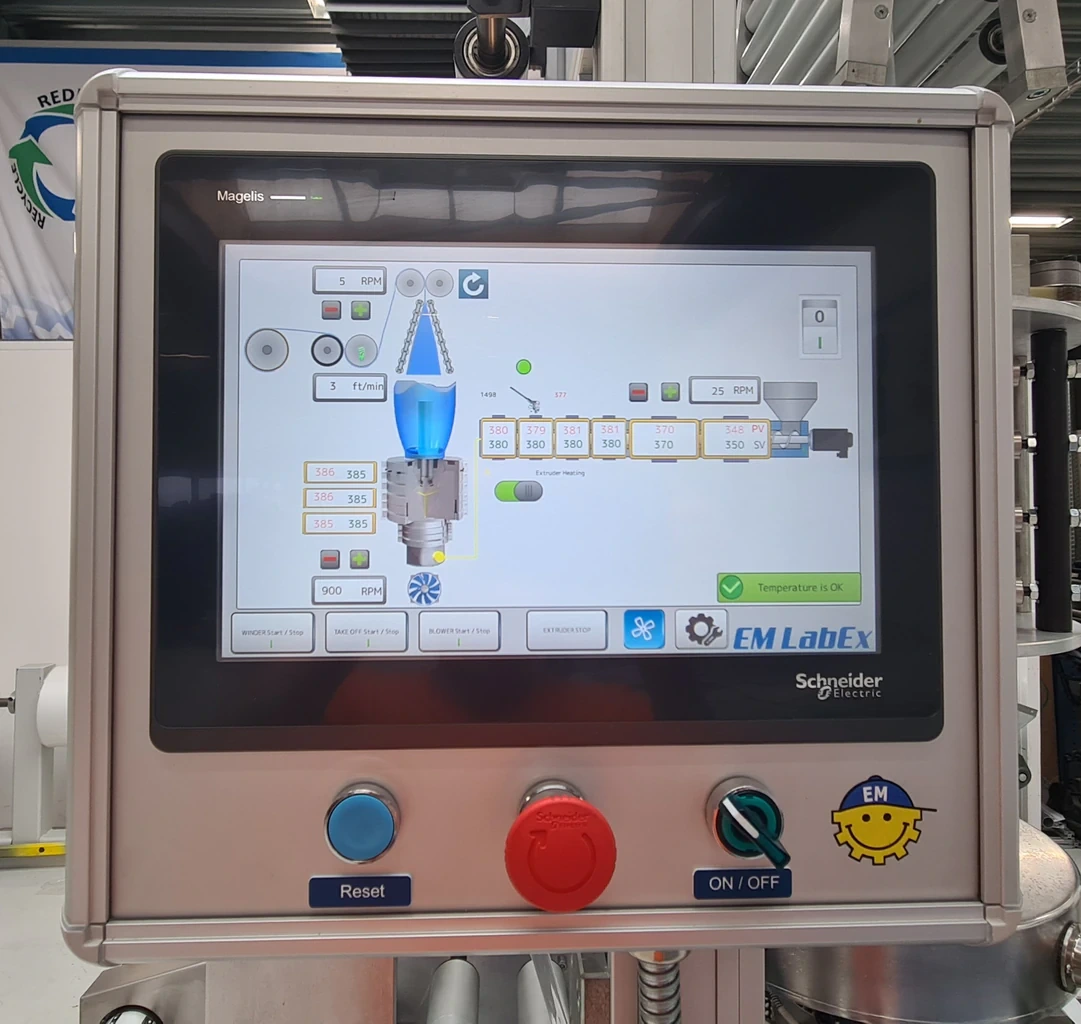


The Schneider Electric control system brings the main machine functions together on one touchscreen. Operators can monitor temperatures, screw speed, take-off speed, winding and alarms while storing successful trial settings for later comparison.
A mono-layer line uses one melt stream, but the recipe can include a base polymer, compatible blends, masterbatch, additives and controlled recycled content.
The screw design, drying, filtration and temperature profile must be selected for the intended polymer. Separate functional layers require an ABA, three-layer or five-layer LabEx line.
The economic value of a laboratory line depends on how often production equipment is used for trials, how much material is consumed, and how quickly new formulations and customer samples must be delivered.
LabEx extruders are manufactured in Denmark using durable mechanical construction and reliable European components. The modular design supports maintenance, future options and continued availability of spare and wear parts.
A mono-layer line uses one extruder and one melt stream to create one film layer. ABA and multilayer lines combine two or more melt streams so that different materials can be placed in separate film layers.
Yes. Although the finished film has one layer, the feed recipe can include compatible polymer blends, colour masterbatch, additives and a controlled proportion of recycled material.
The required quantity depends on the material, setup time, die diameter, output and the amount of film needed for evaluation. The compact line normally uses substantially less material than a production-scale blown film line.
Yes. Alternative mains voltages and frequencies can be evaluated and included in the final technical specification.
Yes. Options include screen changers, melt-pressure sensors, hopper loaders, gravimetric feeding, inspection lighting, defect visualisation and alternative winding arrangements.
Yes. We can discuss your present trial costs, production downtime, outsourced testing, material consumption and intended use to support a practical payback discussion. Financing possibilities can also be reviewed separately.
Send us your materials, intended film width, trial objectives, electrical supply and preferred options. We will prepare a professional technical proposal and quotation for the appropriate LabEx 25-1 configuration.
Continue with practical explanations of the blown film process, laboratory extrusion, materials and troubleshooting.
A clear introduction to feeding, melting, die forming, bubble cooling, take-off and winding.
Read the guide → Laboratory extrusionWhy compact laboratory lines are useful for formulation work, samples, quality control and training.
Read the article → TroubleshootingA practical guide to film defects, possible causes and a controlled problem-solving method.
Read the guide → Polymers and materialsAn overview of standard polymers, recycled materials, biopolymers and their main characteristics.
Read the article →